A Pantry-First Menu for a Rainy Afternoon
A pantry-first menu turns one familiar ingredient into a relaxed shared meal, with a clear sequence of dishes and less last-minute kitchen fuss.
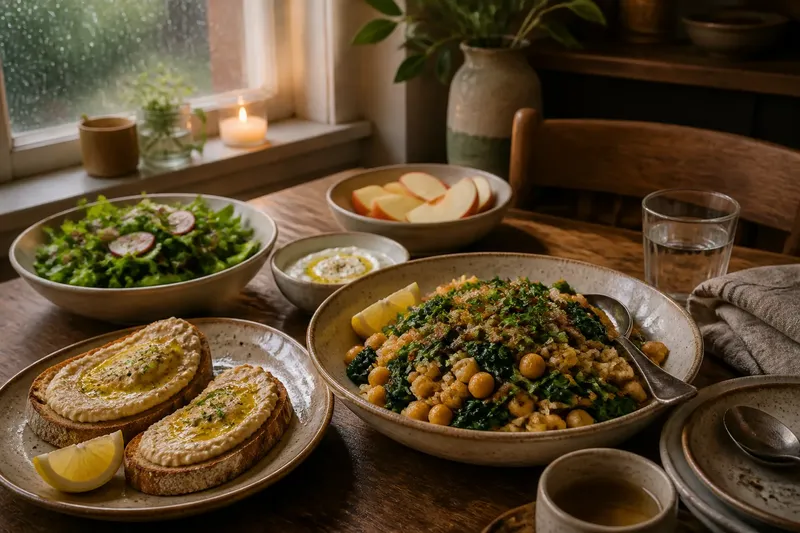
The rain is tapping at the window, a friend has texted that they are nearby, and the cupboard offers chickpeas, rice and a jar of olives. A pantry-first menu starts by choosing one of those ingredients as the meal’s anchor, then giving it a few different jobs across a relaxed sequence of dishes.
The aim is not to make everything taste alike. It is to let one ingredient create a gentle thread between the first bite and the last, while fresh or refrigerated ingredients bring contrast. That approach suits a spontaneous lunch, an unhurried supper or a table where guests can arrive without every dish needing to land at once.
What makes an ingredient a good menu anchor?
Choose something you have enough of, enjoy eating, and can serve in more than one form. Beans, lentils, rice, bread, tinned fish, nuts and olives are useful candidates because they can appear as a dip, a side, a topping or part of a main dish without demanding identical treatment.
Think about the ingredient’s character as well as its quantity. Chickpeas are mild and filling, so they welcome sharp lemon, herbs and toasted spices. Olives bring salt and a firm, distinctive flavour; they are often best used as an accent rather than asked to carry a whole meal.
Look at what else is available before choosing. A bag of carrots, a lemon and a tub of yoghurt can steer a pantry of lentils towards a bright, cosy meal. If the cupboard’s strongest option is smoked mackerel, crisp bread and something fresh may make more sense than adding it to several heavy dishes.
Choose the anchor that gives you options, not the one that needs rescuing.
How do you arrange the dishes around it?
Give the meal a simple arc: a small opening bite, a more substantial centre, and something to finish. The courses can be informal, with bowls passed around, but changing the scale or texture helps the meal feel considered rather than like a set of unrelated cupboard clear-outs.
- Start: Offer a modest nibble or spread, such as crisp bread with mashed beans, lemon and olive oil.
- Continue: Add a light contrast, perhaps sliced apple, dressed leaves or raw vegetables with a quick yoghurt dip.
- Centre: Serve the anchor in a more filling form, such as warm chickpeas with rice, onions and a handful of herbs.
- Finish: Keep dessert easy: fruit, biscuits, tea or a small bowl of yoghurt with honey.
Not every course needs the anchor. If chickpeas appear in both the first bite and the main dish, let the side and dessert take a different direction. A crisp salad or fruit can reset the palate and give the central ingredient room to register.
Say you have a tin of white beans, stale sourdough, a lemon, a little spinach and an apple. You could mash some beans with lemon for toast, warm the rest with spinach and serve them alongside toasted bread, then slice the apple for the end. The expected result is a meal that feels connected but not repetitive, with each dish using the same ingredient at a different scale.
Can one pantry ingredient really carry several dishes?
Yes, if you change its texture, temperature or role. A handful of walnuts might be chopped into a savoury dip, scattered over a warm grain dish and left out of dessert; lentils could be puréed, served whole, or used as a filling. Small shifts in treatment matter more than inventing an elaborate recipe for every course.
Keep the portions and flavours varied. If the anchor is a rich ingredient such as tahini, a little can make a dressing, while the main course might rely on grains and vegetables instead. If the anchor is rice, give the meal lift with pickles, citrus, fresh herbs or crunchy vegetables rather than serving soft rice-based dishes throughout.
For a shared meal, place the anchor in the centre dish and use it more sparingly elsewhere. Guests can then decide how much they want, and the table still has a clear focal point.
What can you make ahead, and what should wait?
Prepare the parts that improve while sitting: a bean spread, a dressing, washed leaves or a bowl of fruit. Keep delicate textures apart until serving. Toasted bread stays crisper when it is kept dry, and fresh herbs retain more of their character when added near the end.
Choose a main dish that can wait without demanding constant attention. A pot of beans or lentils can be warmed gently while you talk; a dish that depends on precise timing may make a casual afternoon feel like a service shift. Set out serving spoons, plates and water before guests arrive, then leave the finishing touches for later.
If you are using packaged, preserved or refrigerated food, follow its label and the maker’s handling directions. For an easy meal, keep hot food hot and cold food chilled until it is time to serve.
How can you keep the menu balanced without another shopping trip?
Balance comes from contrast, not from having a large number of dishes. Pair soft with crisp, rich with bright, and filling with fresh. A squeeze of lemon, a spoonful of yoghurt, sliced onion or a few leaves can change the feel of a plate without becoming a second anchor.
Scan your cupboards and fridge for useful contrasts: vinegar against a creamy bean dish, toasted seeds over soup, or a sharp pickle beside rice. If the meal already has plenty of salt from olives, cheese or tinned fish, taste before adding more. A bowl of water and a pot of tea are also thoughtful table companions on a wet afternoon.
Do not force every leftover into the menu. One or two supporting ingredients are enough; the rest can stay for another meal.
What questions help settle a pantry-first menu?
What if the cupboard ingredient is plain?
Plain ingredients often make the easiest anchors because they take on the character of herbs, citrus, spices or a savoury dressing. Pick one lively contrast and use it deliberately, rather than adding every condiment within reach.
What if guests arrive at different times?
Choose an opening dish that can be eaten in small portions and a centre dish that holds comfortably while people gather. Keep crisp garnishes and dressings separate so they can be added when each serving is ready.
Does every course need to include the anchor?
No. One appearance in the first bite and another in the main dish can be plenty, especially if the ingredient is strongly flavoured. A contrasting side and a simple finish help the meal feel varied.
What if there is no obvious dessert ingredient?
End with what suits the afternoon: tea, coffee, fruit, biscuits or cheese if you have it. A shared meal does not need a cooked dessert to feel complete.
How do you make the table feel relaxed?
Serve the food in dishes people can reach, and let the sequence stay flexible. A small bowl of olives or bread can sit out as guests arrive; the warm main can follow when conversation settles. Leave room on the table for mugs and a serving spoon rather than trying to arrange a formal spread.
Make one decision before you start cooking: which ingredient will hold the meal together? A pantry-first menu works best when that answer guides the dishes without dictating every bite. On a rainy afternoon, that small choice can turn familiar cupboard food into a meal worth lingering over.