Canned Tomatoes or Passata for a Weeknight Sauce?
Canned tomatoes or passata: choose the right texture for a weeknight sauce, from a smooth coating for pasta to a hearty, spoonable finish.
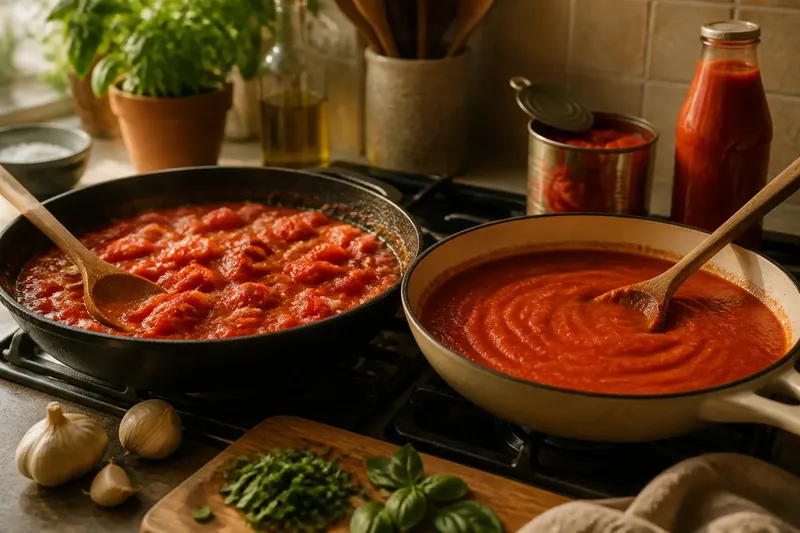
Canned tomatoes or passata can take the same pan of onions in very different directions: one may leave soft pieces in the sauce, while the other starts smooth and even. If you are choosing for a weeknight sauce, think first about the texture you want on the plate, then about how much chopping or blending you feel like doing.
Neither option is automatically better. Canned tomatoes bring variation from chunk to chunk and can be crushed to suit your dish; passata gives you a purée that is already ready to pour. The useful distinction is not “fresh” versus “processed”, but how much texture you want to keep and how much preparation you want the tin or bottle to do for you.
What is the difference between canned tomatoes and passata?
Canned tomatoes are whole, chopped or crushed tomatoes packed in their juice, sometimes with added salt or other ingredients. Whole peeled tomatoes tend to be easy to break up as they cook, while chopped tomatoes give you pieces from the start. The exact texture varies by product.
Passata is sieved tomato purée, usually sold in a bottle or carton. Its smooth consistency means there are no large pieces to crush, though it may still have a little body rather than feeling completely thin. Check the ingredient list: some passatas contain only tomatoes, while others include salt or seasoning.
Think of canned tomatoes as ingredients that still carry some of their original shape, and passata as a prepared base. That difference matters most when the sauce itself is meant to have a noticeable texture.
Which gives a sauce the texture you want?
For a chunky sauce, start with whole peeled or chopped canned tomatoes. Whole tomatoes can be broken apart with a wooden spoon as they soften, leaving some pieces intact; chopped tomatoes make the result more uniform without becoming entirely smooth. If you want a particularly even finish, crush the tomatoes by hand in a bowl or use a spoon in the pan.
Passata is the easier route to a smooth, cohesive sauce. It coats pasta evenly and suits dishes where you do not want tomato pieces competing with ingredients such as finely chopped vegetables, lentils or small pasta shapes. If the finished sauce feels thinner than you like, simmer it uncovered so some of its water can evaporate.
Texture can also be adjusted after opening. Blend canned tomatoes for a smoother result, or stir a spoonful of passata into a sauce made with canned tomatoes if you want more liquid around the pieces. There is no need to commit to a perfectly smooth or distinctly chunky finish before cooking begins.
How much preparation does each option need?
Passata goes straight into the pan, which makes it convenient when you want to keep preparation brief. It may need stirring as it cooks, but there is no chopping or crushing to do first. A bottle can also be easy to portion, though it is sensible to check how to store any remainder on its packaging.
Chopped canned tomatoes need little preparation, but their pieces may be larger or firmer than you want for a quick sauce. Whole peeled tomatoes ask for a little more attention: crush them before they go into the pan, or break them up while they simmer. A potato masher works in the pan if you want smaller pieces without dirtying a blender.
Say you have onions softening in a pan and want a smooth sauce for spaghetti. Pour in passata and stir; the expected result is an even tomato base with no pieces to crush. If you have a short shape of pasta and want sauce to cling around visible tomato pieces instead, canned tomatoes are a more direct starting point.
Do canned tomatoes or passata need different cooking?
Both benefit from time in the pan with the aromatics and seasoning, but their starting textures affect what to watch. Canned tomatoes can release juice around their pieces, so the sauce may look loose before it reduces. Passata begins as a smoother mixture and may thicken more evenly as it simmers.
Keep the pan uncovered if you want moisture to escape, and stir often enough to stop the base catching. If you are adding garlic, herbs or chilli, let them meet the oil before adding the tomatoes so their flavour spreads through the sauce. The method need not change dramatically; adjust the cooking time to the consistency you can see.
Salt also deserves a quick check before seasoning. Canned tomatoes and passata can differ in added salt, and ingredients such as stock, olives or cheese may bring more. Taste near the end and season in small additions rather than treating every tin or bottle as identical.
Can you swap them in a recipe?
Usually, yes, but expect to adjust the texture rather than assume the sauce will look exactly the same. Replacing chopped tomatoes with passata removes the pieces and may make the base more uniform. Replacing passata with canned tomatoes introduces pieces and can leave more liquid around them.
If a recipe depends on a smooth sauce, crush or blend the canned tomatoes before adding them. If it calls for chopped tomatoes but passata is what you have, simmer the passata until it reaches the body you want; it will remain smooth. Where the recipe relies on distinct pieces, a smooth substitute cannot recreate that texture, so the result will be different even if the flavour is familiar.
Also look at the surrounding ingredients. A sauce with diced courgette or mushrooms already has plenty of texture, so passata can provide a calm, even base. A simple sauce with few additions may feel more substantial with pieces of tomato left in it.
What do cooks often ask about canned tomatoes and passata?
Is passata the same as tomato purée?
The terms can vary between products and places, so check the label rather than relying on the name alone. Passata is commonly a sieved tomato purée intended as a pourable cooking base; some products called tomato purée are more concentrated.
Should passata be cooked before serving?
For a warm pasta sauce, cook it with the other ingredients until it reaches the flavour and thickness you want. Follow the product label for any specific handling advice, especially if you are using it in a preparation that will not be cooked.
Can canned tomatoes make a smooth sauce?
Yes. Crush them thoroughly with a spoon or blend the sauce once it has cooked, depending on how smooth you want it. Whole peeled tomatoes are particularly straightforward to break down as they soften.
Which is better for a quick pizza sauce?
Passata offers a smooth base that is easy to spread, while canned tomatoes can work if you crush and drain them to avoid excess liquid. Choose according to the thickness you want on the dough and the texture you prefer in the finished topping.
How should you decide at the shelf?
Read the front and back of the tin, bottle or carton. Look for whole, chopped or crushed tomatoes if you want pieces, and passata or sieved tomatoes if you want a smooth base. Then check whether salt or herbs have been added, particularly if you plan to season the sauce yourself.
- Choose whole peeled tomatoes when you want to control the size of the pieces.
- Choose chopped tomatoes when a little texture is welcome without extra crushing.
- Choose passata when you want a smooth sauce with minimal preparation.
- Choose a product with no added seasoning if you want to shape the flavour yourself.
- Check the container instructions for storage and use after opening.
For a weeknight sauce, canned tomatoes or passata is ultimately a choice about the texture you want and the small job you would rather skip. Keep passata for an even coating, reach for canned tomatoes when you want visible pieces, and remember that crushing, blending or simmering can fine-tune either one once it is in the pan.