What Happens When Sugar Meets Heat
What happens when sugar meets heat? Learn how time and temperature shift caramel from pale and mild to dark, bitter and brittle, so you can choose the right stage.
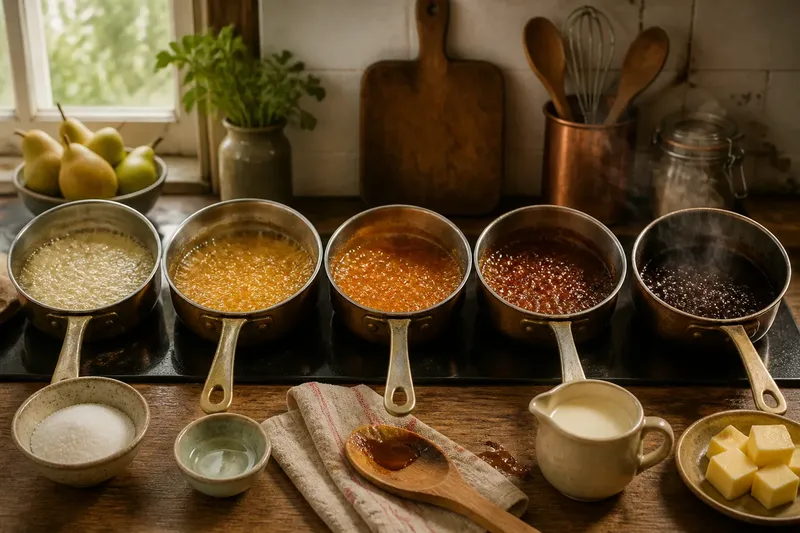
What happens when sugar meets heat depends on how long it stays hot as much as how hot it gets. In a saucepan, a spoonful can move from mild and pale to deeply flavoured and brittle, then turn bitter if the cooking continues. Understanding those changes makes it easier to choose the right stage for a sauce, a crisp topping or a soft sweet.
Why does heated sugar change in stages?
As sugar warms, its molecules break down and recombine into new compounds. This process, called caramelisation, creates the familiar toasted aromas and brown colour of caramel. It is different from browning in bread or biscuits, where sugars react with proteins as well as heat.
Caramelisation is not a single switch that flips at one exact point. The sugar’s colour, aroma and consistency develop together, while the pan’s heat and the time spent cooking influence how quickly the change unfolds. A heavy-bottomed saucepan tends to distribute heat more evenly than a thin one, though no pan removes the need to watch closely.
Water affects the route. In a dry method, sugar melts directly in the pan; in a wet method, it dissolves in water first, then the water evaporates before the sugar browns. The wet approach gives you a visible syrup to observe, while dry caramel can move rapidly from melted sugar to deep colour.
How do the main caramel stages differ?
Think of the stages as choices rather than a race to the darkest colour. A lighter caramel usually tastes gentler and sweeter; a darker one brings more roasted, complex notes, with bitterness becoming more pronounced as it cooks on. The texture also depends on what happens after the pan leaves the heat.
- Pale gold: The syrup has a delicate toasted aroma and a mild flavour. It suits delicate desserts or a light caramel sauce where the sugar should not dominate.
- Amber: The colour deepens and the aroma becomes more rounded, with a clear balance of sweetness and toastiness. This is a versatile choice for flan, caramel sauce or a glaze.
- Deep amber: The flavour becomes more intense, with darker roasted notes and a sharper edge. It can add depth to a dessert, but a small shift in cooking can make it taste acrid.
- Very dark or burnt: The caramel may smell harsh and taste unpleasantly bitter. It is usually better to start again than to try to cover the burnt flavour with cream or extra sugar.
These descriptions are useful cues, not a promise that every pan will look identical. A coloured saucepan can make the syrup harder to judge, so follow the aroma as well as the visible shade.
Should you use dry or wet caramel?
Is dry caramel better for speed?
Dry caramel suits cooks who want a direct method and are comfortable keeping their attention on the pan. The sugar melts without added water, but it can colour quickly and unevenly if the pan has hot spots. Gentle tilting of the pan helps distribute the melting sugar; vigorous stirring can encourage clumps.
Does wet caramel give you more control?
Wet caramel suits a cook who prefers to begin with a dissolved syrup and watch it change as water cooks away. It can be easier to follow by colour, though sugar crystals may form on the pan’s sides and seed crystallisation. A clean pan and avoiding unnecessary stirring help keep the syrup smooth.
Which method should a beginner choose?
Choose the method that lets you monitor the pan without distraction. If you want to see a syrup’s colour develop gradually, wet caramel may feel more legible; if you are confident watching melting sugar closely, dry caramel offers a direct route. For either method, have the ingredients for the next stage ready before the colour reaches your preferred point.
How do time and temperature shape the result?
Heat sets the pace, while time determines how far the sugar travels along its flavour arc. A more vigorous heat can darken a small area before the rest of the pan catches up. A steadier, moderate heat gives you more opportunity to notice the aroma and colour changing, but the sugar still needs close attention near the end.
Once sugar has melted and begun to brown, the pan’s residual heat continues the cooking. If you wait until the caramel looks exactly as dark as you want before removing it from the hob, it may deepen further. Taking it off a little earlier can help account for that carry-over, especially in a heavy pan.
Imagine you are making a sauce for pears and want a rounded, not bitter, flavour. You let a wet syrup reach an even amber, then remove the pan from the hob before adding warm cream; the expected result is a sauce with toasted notes that still tastes sweet, rather than one dominated by dark bitterness. The useful decision is the stopping point, not a universal cooking time.
Why does caramel become runny, chewy or hard?
Caramel’s texture depends on its water content and what is added after browning. A little liquid can loosen it into a sauce; cooking the syrup further, then cooling it, can produce a firmer sweet. Temperature matters again here: hot caramel flows, while cooled sugar sets into a harder form.
Adding cream, butter or another liquid changes the mixture, sometimes dramatically. The temperature difference can make it bubble and surge, so choose a pan with enough room and add ingredients cautiously. The exact handling depends on the recipe and the product instructions; follow those where they apply.
Humidity can also affect crisp caramel decorations. Sugar draws moisture from the air, so a delicate spun-sugar garnish may soften while a sauce remains perfectly usable. If crispness is the goal, make the decoration close to serving and keep it away from steam.
What should you do if the caramel misbehaves?
Why has the sugar turned grainy?
Crystallisation happens when sugar crystals form again in the syrup, leaving it grainy rather than smooth. In a wet method, crystals clinging to the pan’s sides can encourage this change; avoid stirring once the syrup is boiling and use a clean utensil if the recipe calls for one.
Can pale caramel be cooked darker?
Yes, if it has not crystallised or burnt, you can continue heating and watch for a deeper shade and aroma. Keep in mind that it may darken after leaving the hob, so remove it before it reaches the final colour you want.
Can burnt caramel be rescued?
A harsh, acrid smell is a clear sign that the sugar has gone too far. Adding cream or another ingredient may change the texture, but it will not reliably remove the burnt taste; starting again is the sensible option.
How do you choose the right browning stage?
Start with the finished dish. A light sauce for fruit may call for pale gold, while flan often benefits from amber and a more pronounced caramel note. A darker stage can suit a dessert that needs a bolder counterpoint, provided the bitterness is intentional rather than accidental.
Then choose the method that fits your attention and equipment. Wet caramel makes the colour easier to track in a clear syrup; dry caramel avoids the initial water but rewards close observation. In either case, use a clean, heavy-bottomed pan, keep the next ingredients ready and judge colour alongside smell.
For a practical reference, notice the shade and aroma that suit your own dishes, then use those cues next time rather than relying on a fixed time alone. What happens when sugar meets heat is a sequence you can learn to read: the right moment is the one that gives your dish the flavour and texture it needs.